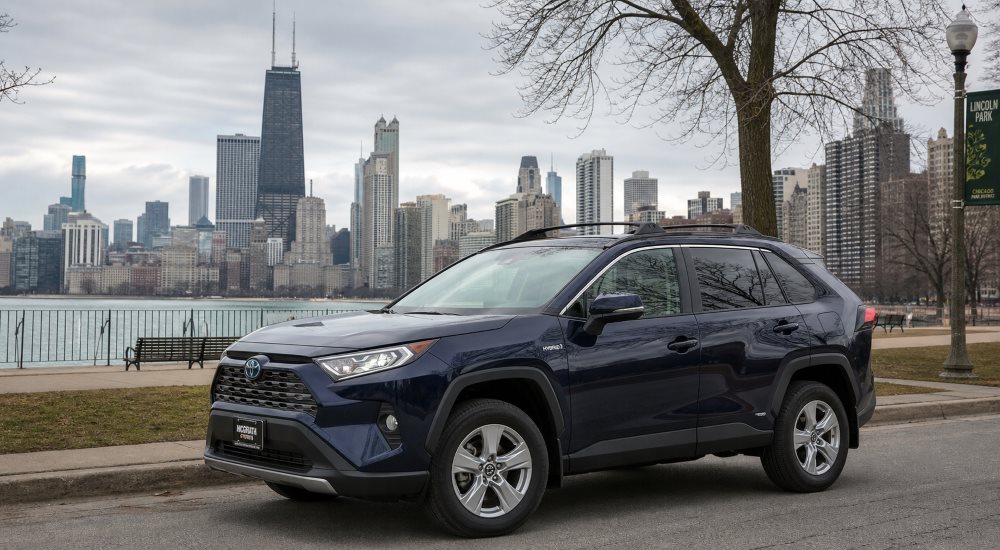
From the Toyota-trained team in Lincoln Park. Toyota of Downtown Chicago (formerly Toyota of Lincoln Park) services the full Toyota hybrid lineup - Prius, Prius Prime, Camry Hybrid, RAV4 Hybrid, RAV4 Prime PHEV, Highlander Hybrid, Sienna, Crown, and Sequoia i-FORCE MAX - using Toyota Diagnostic Tester (Techstream) and Genuine Toyota Parts. New Toyota purchases include ToyotaCare, covering 2 years or 25,000 miles of factory-scheduled maintenance at no charge, and Toyota hybrid traction batteries on 2020-and-newer models carry a 10-year / 150,000-mile warranty. This guide reflects general guidance based on Toyota's published maintenance schedule along with patterns commonly observed in Chicago driving conditions - always refer to your owner's manual for model-specific intervals, and final service recommendations may vary based on vehicle condition and a service advisor's inspection. Last reviewed May 2026.
If you bought a Toyota hybrid for Chicago city driving, you bought the right car for the job - short trips, frequent stops, stop-and-go commutes on Lake Shore Drive, and downtown crawls in River North are exactly the conditions where regenerative braking and the electric motor pay back the most fuel. But Chicago also adds three variables that can affect how a hybrid wears: sub-zero cold starts that are commonly hard on 12-volt batteries, road salt that can attack the high-voltage battery cooling fan and sensor connectors under the chassis, and short urban trips so brief the gas engine never fully heats up. Schedule service at (872) 353-8943, and keep reading for what experienced technicians often recommend in addition to Toyota's official maintenance schedule.
This guide covers what's different about Toyota hybrid service compared to a gas-only Toyota, how Chicago climate and downtown driving patterns can affect real-world wear, the EV-mode and regenerative-braking habits that actually matter for fuel economy here, representative service costs based on currently published specials, and model-specific patterns commonly observed across Prius, Prius Prime, Camry Hybrid, RAV4 Hybrid, RAV4 Prime, Highlander Hybrid, Sienna, Crown, and Sequoia.
What's Different About a Toyota Hybrid (and What Isn't)
A Toyota hybrid is not a fundamentally separate machine from a gas Toyota. It still uses engine oil, an oil filter, an air filter, a cabin filter, brake fluid, coolant, and 12-volt accessory power. The five-thousand-mile Maintenance Required reminder works the same way. What changes is which components wear differently, and which can require service the gas equivalent doesn't.
Three areas are commonly cited as different on hybrids:
| Hybrid-Specific Item | What's Different | Typical Inspection Cadence |
|---|---|---|
| High-voltage traction battery | A nickel-metal-hydride or lithium-ion pack that powers the electric motor. It needs cooling airflow, and on most Toyota hybrids the cooling intake is in the cabin or rear cargo area. | Visual inspection at scheduled intervals; cooling intake check periodically. Diagnostics may be recommended if symptoms are present. Warranty: 10 yr / 150,000 mi on 2020+ models - refer to your warranty booklet. |
| Brake pads | Regenerative braking does much of the slowing in city driving, so friction pads commonly see less use. Pad life can exceed the gas equivalent significantly. | Visual inspection at every rotation; condition-based replacement. Pad life is often substantially longer in city driving - though rotor surface condition may need attention sooner in salt-belt climates. |
| 12-volt auxiliary battery | A small AGM (or sometimes flooded) battery that wakes up the hybrid system. It does not start the gas engine - the traction battery does that - but if the 12V is depleted, the car may not power on. | Testing is commonly recommended annually after year three. Replacement is condition-based - many vehicles may need it earlier in cold-climate use depending on driving patterns. |
| Inverter coolant (separate from engine coolant) | A second pink-colored long-life coolant loop cools the inverter and motor-generator unit. It's not the same fluid as the engine coolant. | Refer to your owner's manual for the exact interval - typically a longer-interval service item. Inspection at scheduled visits; replacement per Toyota's specification. |
Notice what's not on this list: oil change intervals, transmission service, spark plugs, and air filters generally follow the same schedule as a gas Toyota. The Atkinson-cycle gas engine in a hybrid runs less, but when it runs it runs hard, and Toyota's recommendation for severe-service operation is 5,000 miles or 6 months. The 10,000-mile interval applies to drivers who put highway miles on a hybrid. Most Lincoln Park, Wicker Park, or River North hybrid drivers won't qualify for the 10K interval - short trips and city stop-and-go are explicitly listed as severe service in Toyota's own classification. Always refer to your owner's manual for model-specific guidance.
Why Chicago Hybrid Owners May See Patterns Other Markets Don't
This is the section where Chicago-specific context matters most. Generic hybrid maintenance guides are often written for "average" conditions. Chicago is not average for a hybrid. Four climate-and-driving patterns are commonly observed in Toyota hybrids operated in this region:
Sub-zero cold starts can be hard on 12-volt AGM batteries
This is one of the more frequently observed hybrid service patterns in cold-weather markets, and it commonly surprises owners through their first or second winter. The AGM 12-volt battery in a Toyota hybrid is small - typically 35–45 amp-hours, far smaller than a gas Camry's battery - because it doesn't have to crank a starter motor. Its primary job is to wake up the hybrid system. AGM chemistry handles cold reasonably well, but each sub-zero start cycle (Chicago averages a couple dozen mornings below 0°F per winter) can incrementally reduce capacity. By year three or four, an AGM battery that performed fine in September may struggle to wake the car on a January morning. Symptoms can include a flickering "Hybrid System Malfunction" message, slow infotainment boot, or occasionally a no-start where the car won't power on.
The general approach experienced technicians often recommend is preventive: have the 12V tested annually starting around year three. Many vehicles may need replacement around year four to five depending on usage and climate, though some last longer. A free battery inspection is available with any other service through our battery inspection special; final recommendations depend on the test result and advisor inspection.
Lake Shore Drive salt and calcium chloride can affect hybrid-specific components
Illinois uses both rock salt and calcium chloride brine on highways, and calcium chloride is generally more aggressive on metal than rock salt alone. On Toyotas operated through three or more Chicago winters, corrosion patterns are commonly observed on:
- The traction battery cooling intake screen, particularly on 2010–2015 Prius and 2013–2018 Camry Hybrid where the intake sits inside the cabin behind the rear seat. Salt residue dragged in on coats and pet hair can clog the screen and reduce airflow over time. Inspection - not automatic replacement - is the typical first step.
- Brake rotor surfaces. Hybrid brakes can see relatively little use, so overnight surface rust can form more readily than on a gas car. The first three or four stops in the morning may feel rough until the rust is cleared. This is normal hybrid behavior in salt-belt climates, but extended cases can produce uneven rotor wear that may require resurfacing or replacement before pad life is up.
- Wheel speed sensors and ABS connectors, which the hybrid system uses to coordinate regenerative braking. Corroded connectors can throw codes that look like "brake system" faults but originate in salt-water intrusion rather than the brake or hybrid hardware itself.
- Exhaust hangers and heat shields on the gas engine. The Atkinson-cycle engine runs cool relative to a conventional engine, which can mean the exhaust never fully drives off road moisture, and rust may accelerate.
None of this means a hybrid is a bad choice for Chicago - quite the opposite for fuel economy. It does mean the inspection items added at scheduled visits in this region tend to focus on what salt commonly does to these components, in addition to Toyota's standard checklist.
Short downtown trips may not let the gas engine fully heat-cycle
The Atkinson-cycle gas engine in Toyota Hybrid System II shuts off below about 25 mph when the traction battery has charge, and on very short trips it may barely run at all. That sounds like a feature - and for fuel economy, it is - but engine oil degrades fastest in the first ten minutes after a cold start, and an engine that runs intermittently for a 1.5-mile trip from Streeterville to River North may never reach full operating temperature. Water vapor and unburned fuel can accumulate in the oil over time. The visible result is what the industry calls oil dilution.
For drivers in this pattern, experienced technicians often recommend the 5,000-mile / 6-month interval rather than the 10,000-mile interval, in line with Toyota's own severe-service classification. This generally applies to Prius, Camry Hybrid, RAV4 Hybrid, Highlander Hybrid, Sienna, and Crown alike - refer to your owner's manual for the model-specific severe-service definition. Our 5-Quart Oil & Filter Change at $89.95 covers the full synthetic Toyota requires for hybrid models built on the TNGA platform.
Cold weather can cut hybrid fuel economy more than people expect
A 2026 RAV4 Hybrid rated at 39 mpg combined will commonly deliver real-world numbers in the low-to-mid 30s through January and February in Chicago. The reasons are partly chemistry - battery cells deliver less energy near freezing - and partly behavior: a cold cabin demands the gas engine run to produce heat, defeating much of the fuel-saving electric mode. Owners who pre-condition the cabin while plugged in (Prius Prime, RAV4 Prime), keep tire pressures at the door-jamb spec through pressure drops in cold snaps, and avoid heavy throttle in the first quarter mile after a cold start can recover several mpg. Customer fuel logs commonly show drivers who follow these habits averaging roughly 10–15% better cold-weather mpg than those who don't.
Toyota Recommended Maintenance Schedule (Hybrid Models)
About this schedule: The table below summarizes Toyota's general published maintenance intervals for hybrid models. The next section, "Additional Checks for Chicago Driving Conditions," lists supplementary inspection items experienced technicians often recommend in this region - these are not part of Toyota's official schedule but are commonly added based on local climate and driving patterns. Specific services may vary by vehicle, model year, and advisor inspection. Always refer to your owner's manual for model-specific intervals, and consult your service advisor for recommendations based on your vehicle's actual condition.
| Mileage | Toyota-Recommended Service Items |
|---|---|
| 5,000 mi / 6 mo | Tire rotation, multi-point inspection, brake inspection, fluid-level check, and oil change if at the 10K interval (refer to your owner's manual for the applicable severe vs. normal classification). |
| 10,000 mi / 12 mo | All 5K items plus oil and filter change with 0W-16 or 0W-20 full synthetic (model-dependent), cabin air filter inspection, and engine air filter inspection. |
| 15,000 mi | Standard scheduled inspection items per Toyota's maintenance schedule. |
| 30,000 mi | Engine air filter and cabin air filter typically replaced (condition-based on some models), brake fluid inspection (replacement per condition), inverter coolant inspection per Toyota's specification. |
| 60,000 mi | Spark plug replacement on most hybrid models (some Prius iridium plugs are spec'd to last longer - check your owner's manual), brake fluid replacement, transmission/transaxle fluid inspection. |
| 100,000 mi | Inverter coolant replacement (initial service interval per most owner's manuals), engine coolant replacement. |
Additional Checks for Chicago Driving Conditions
The items below are not part of Toyota's official scheduled maintenance. They are supplementary inspections experienced technicians often recommend in Chicago and other salt-belt, cold-climate markets, based on patterns commonly observed in real-world conditions. Whether any of these apply to your specific vehicle depends on actual condition, driving pattern, and advisor inspection.
| When | Suggested Inspection (Chicago Conditions) |
|---|---|
| Annually after year 3 | 12-volt AGM auxiliary battery test. Replacement is condition-based - many vehicles may need it earlier in cold-climate use depending on driving patterns. |
| Each spring | Underbody and brake-line visual inspection for salt-related corrosion; suspension and alignment check after pothole season. |
| At every rotation | Brake rotor surface visual check (especially rear) - surface corrosion can be more common in this climate than pad wear. Inspection-first; resurfacing or replacement only if condition warrants. |
| Periodically | Traction battery cooling intake screen inspection - debris and salt residue can restrict airflow over time. Cleaning is typical; component service only if airflow is meaningfully restricted. |
| If symptoms are present | Toyota Diagnostic Tester (Techstream) cell-level traction battery diagnostic. This is generally recommended only when warning lights, range loss, or rough operation indicates a possible issue - it is not a routine scheduled item. |
Why this article includes a Chicago-conditions section: Toyota's published schedule is designed to apply nationally. In addition to that schedule, Toyota-trained technicians in cold-climate, salt-belt regions often recommend supplementary visual inspections based on patterns commonly observed locally. Toyota Diagnostic Tester (Techstream) provides cell-level traction battery data that aftermarket scan tools generally don't, and it is most useful when symptoms suggest a possible problem rather than as a routine scheduled item. ToyotaCare covers the first 2 years / 25,000 miles of Toyota-scheduled maintenance at no charge for new Toyota purchases.
Toyota Hybrid Maintenance by Model
Prius and Prius Prime
The original benchmark, and still the most efficient gas-burning vehicle Toyota sells. Fifth-generation Prius (2023+) returns 57 mpg combined; Prius Prime PHEV (2023+) offers about 44 miles of all-electric range plus a 52-mpg combined figure when the battery is depleted. For a downtown Chicago driver who can plug in at home, the Prime can run on electricity alone for typical Lincoln Park to West Loop commutes for most of the year.
Service patterns commonly observed on Prius:
- "Maintenance Required Soon" appears around 4,500 miles on most 2010+ Prius models - about 500 miles before the full reminder. That's by design, not a malfunction.
- The 12V AGM battery in 2010–2015 third-generation Prius is small and sits in the cargo area. Cold-climate use can be hard on it; many vehicles in this region may need replacement around year four to five depending on usage.
- Prius Prime adds high-voltage charging system inspection - the onboard charger, charge port, and J1772 charging cable can be inspected periodically for connector corrosion, especially with regular plugged-in pre-conditioning through the winter.
- The traction battery cooling intake sits behind the rear passenger seat on third- and fourth-generation Prius. Pet hair, dust, and salt residue dragged in on shoes can restrict airflow over time. Visual inspection at scheduled visits is generally sufficient.
Camry Hybrid
The Camry Hybrid uses Toyota's TNGA-K platform and the 2.5L Dynamic Force engine paired with Toyota Hybrid System II. Through 2024 model year it returned about 47–52 mpg combined depending on trim. For 2025, all Camry trims became hybrid-only - every new Camry is now a hybrid.
One pattern commonly observed on Camry Hybrid in Chicago conditions: long-term reliability is excellent, but rear brake rotors can corrode from underuse plus salt exposure before the front pads wear out. It's not unusual for Camry Hybrid customers to need rear rotor service before front brake pads ever get changed - the opposite of a gas Camry. Asking for a brake inspection at every rotation, especially after the third Chicago winter, can catch this early. Whether service is needed depends on actual condition and advisor inspection.
RAV4 Hybrid and RAV4 Prime
One of the most popular hybrids in the Toyota lineup and a common sight in Chicago hybrid service. The RAV4 Hybrid is rated at 39 mpg combined; the RAV4 Prime PHEV adds about 42 miles of electric range plus AWD as standard equipment, and for many Chicago suburban drivers (Oak Park, Cicero, Berwyn, Morton Grove, Des Plaines, Elmhurst) the Prime can cover daily driving on electrons alone with only occasional gas engine starts.
Two RAV4-specific points worth knowing:
"Engine maintenance required" messages on 2019–2021 RAV4 Hybrids are sometimes mistaken for traction battery problems. They generally aren't. The "engine maintenance required" message is the standard 5,000-mile reminder on the gas engine; it's unrelated to hybrid system health and resets the same way.
RAV4 Prime carries additional high-voltage service considerations. The 18-kWh lithium-ion traction battery is much larger than the 1.6-kWh nickel-metal-hydride pack in a standard RAV4 Hybrid, and the onboard charger and charging system can require periodic inspection separate from the standard hybrid system. Toyota-trained technicians have the high-voltage personal protective equipment (PPE) and lockout-tagout procedures required for safe service on plug-in hybrids - work that many general-purpose independent shops are not equipped to perform.
Highlander Hybrid
The Highlander Hybrid uses the same 2.5L Dynamic Force / Toyota Hybrid System II combination as the RAV4 Hybrid but with all-wheel drive across the lineup and a third-row seat. EPA-rated at 36 mpg combined for the 2026 model year. For families in Lincoln Park, Lakeview, Bucktown, and the suburbs, it's the largest Toyota hybrid that doesn't sacrifice fuel economy.
Highlander-specific consideration: the AWD electronic transfer and propeller shaft on the rear axle add inspection items that don't apply to a front-drive Camry Hybrid. Driveline fluid changes follow Toyota's standard Highlander schedule - typically inspected at 30,000 miles and replaced based on condition or per the interval specified in your owner's manual.
Sienna and Crown
The 2021+ Sienna is hybrid-only - there's no gas-only Sienna in production. It uses Toyota's 2.5L Dynamic Force / THS II combination with available AWD, and returns about 35–36 mpg combined, which is roughly 50% better than the previous V6-powered Sienna. For Chicago families doing carpool runs in River North and Old Town, the Sienna delivers genuinely good fuel economy in the stop-and-go conditions hybrids handle best.
The Crown sedan is offered as a standard hybrid (about 41 mpg combined) and as a Hybrid MAX with a turbocharged 2.4L paired to a six-speed automatic and an electric motor (about 30 mpg combined, with substantially more performance). The Hybrid MAX system shares some hardware with the new turbocharged Tacoma and Sequoia i-FORCE MAX powertrains. Service intervals follow Toyota's published schedule, but turbocharged variants can be more sensitive to short-trip oil dilution - see the cold-weather and short-trip section above. Refer to your owner's manual for the applicable interval.
Sequoia i-FORCE MAX
The 2023+ Sequoia is hybrid-only as the i-FORCE MAX, pairing a twin-turbocharged 3.4L V6 with a 10-speed automatic and an electric motor between them. This is a very different hybrid from the Atkinson-cycle Prius - it's tuned for towing and torque, not maximum fuel economy. Service intervals match Toyota's standard schedules, but the same considerations about short-trip turbocharged operation apply, and frame and underbody visual inspection is commonly recommended for Chicago salt-belt drivers. Always refer to your owner's manual for the model-specific severe-service interval.
Hybrid Battery Life: What's Realistic, What's Covered, What It Costs
One of the most-asked questions among prospective hybrid buyers - and from current owners around year seven or eight - is "how long will the battery last and what does replacement cost?"
The honest answer:
Hybrid traction batteries on Toyotas commonly last 200,000+ miles. The original Prius (introduced in the U.S. in 2000) demonstrated that nickel-metal-hydride packs can outlive most owners' interest in keeping the car. Modern lithium-ion packs in the RAV4 Prime and current-generation hybrid models are expected to perform similarly or better.
Toyota's warranty for 2020-and-newer hybrid batteries is 10 years or 150,000 miles, whichever comes first. For batteries on 2019-and-older models, the original warranty was 8 years / 100,000 miles. The warranty covers full pack failure as well as performance degradation that drops capacity below specification - refer to your warranty booklet for the exact terms applicable to your vehicle.
Replacement cost outside warranty varies widely. Toyota's reconditioned-pack programs and dealer-installed remanufactured packs are typically the most cost-effective route; new-pack pricing is meaningfully higher. Specific pricing is not published here because it depends on model, year, pack chemistry, and current Toyota program availability - call our service department at (872) 353-8943 for a model-specific written estimate.
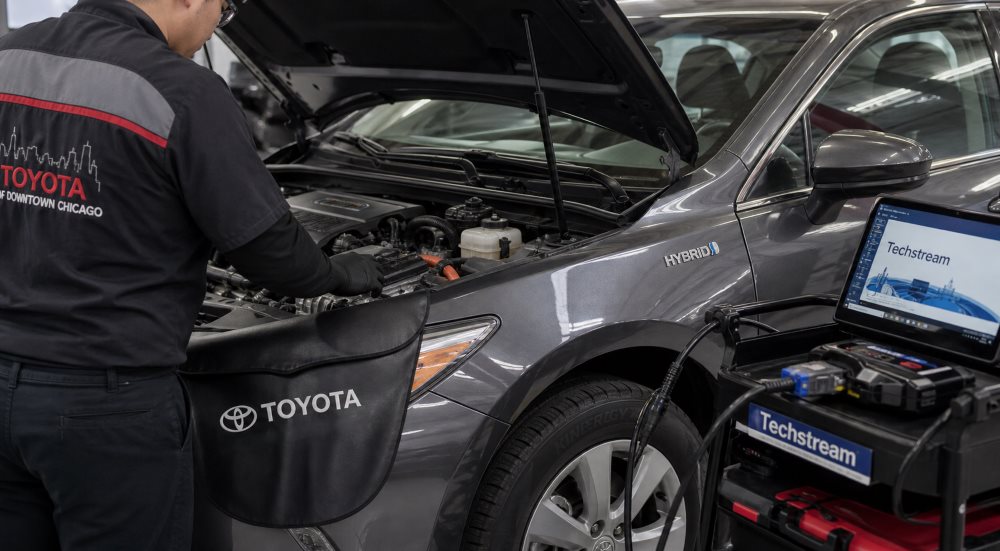
One thing worth knowing: A "weak hybrid battery" is sometimes diagnosed when the actual issue can be a single bad cell, a corroded busbar connection, or a failed cooling fan. Toyota Diagnostic Tester (Techstream) reads cell-level voltage, internal resistance, and temperature data that aftermarket scan tools generally don't provide. Before authorizing pack replacement, requesting a Techstream cell-level diagnostic is commonly recommended - it can confirm whether the full pack is at fault or whether a smaller component-level repair is appropriate.
Driving Habits That Matter for Chicago Hybrid Owners
Most hybrid efficiency advice on the internet is written for warmer climates. Here's what's specifically worth considering in Chicago conditions:
Use EV mode where it helps
EV mode forces the car to run on electrons only, up to a battery threshold and a speed limit (typically 25 mph on most non-Prime Toyotas). It's most useful in two specific places:
- Indoor parking garages - silently and emissions-free pulling out of a Loop or River North garage at 5–10 mph.
- Residential streets very close to home - the last few hundred feet on a quiet Lincoln Park or Bucktown side street, especially when you don't want to wake the neighbors at 6:00 AM.
EV mode generally does not save fuel on the open road or at highway speed. The car typically optimizes engine-vs-electric handoff more efficiently than manual selection. Hitting EV mode on the Kennedy Expressway often just forces the gas engine to recharge the battery later, sometimes at lower efficiency than if it had run on demand.
Pre-condition while plugged in (Prime owners)
RAV4 Prime and Prius Prime drivers can pre-heat the cabin while still plugged in to home charging - using grid electricity instead of battery range. On a 5°F January morning in Lakeview, a 10-minute pre-condition can recover roughly 20–30% of the cold-weather range loss you'd otherwise see. The Toyota app (Remote Connect) can schedule it before your morning departure.
Keep tire pressures honest
Tire pressure drops about 1 PSI per 10°F temperature drop. A Chicago temperature swing from a 70°F October day to a 0°F January morning takes a tire from 35 PSI down to about 28 PSI - well below spec, which can hurt fuel economy by 3–5% and accelerate tire wear. Checking pressures monthly through the cold months and refilling to the door-jamb spec (not the sidewall maximum) is the standard recommendation.
Don't ride the brakes
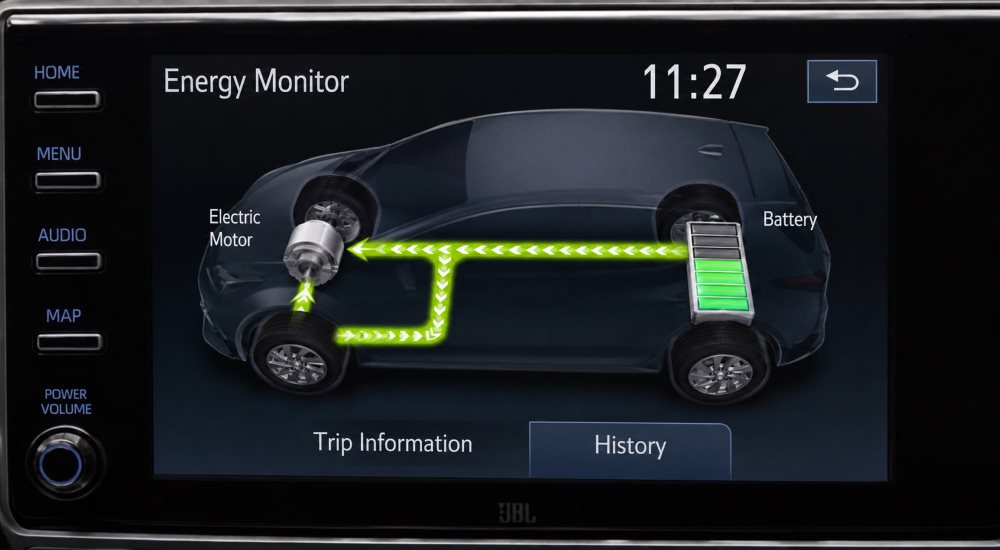
Regenerative braking captures the most energy when you let the car coast and then apply gentle, progressive brake pressure. Aggressive last-second braking dumps most of the kinetic energy as heat through the friction pads instead of recovering it as electricity. It's a learned skill - many new hybrid owners find that consciously practicing "look-ahead" braking at Chicago intersections over the first month yields meaningful improvements. Real-world fuel economy gains of 2–4 mpg from this habit alone are commonly reported.
Dealer vs. Independent Shop for Hybrid Service: When Each Is Fine
This is a Toyota dealer article, and you'd expect it to be slanted. It won't be.
An independent shop is generally fine for: standard 5K and 10K oil changes (any shop using the correct full-synthetic spec - typically 0W-16 or 0W-20 - and a Toyota-spec oil filter), tire rotations, cabin and engine air filter inspection or replacement, wiper blade replacement, and 12-volt battery testing or replacement. None of these require hybrid-specific tooling.
A Toyota dealer can be meaningfully better for: anything covered by your hybrid system warranty (the 10-year/150K traction battery warranty, hybrid component warranty, and federal emissions warranty generally require proper dealer documentation), traction battery diagnostics that benefit from Techstream cell-level reads, RAV4 Prime / Prius Prime high-voltage system service that requires high-voltage PPE and lockout-tagout, inverter coolant service, and work involving the hybrid transaxle or motor-generator unit. Independent shops with hybrid certification do exist, but many general shops aren't equipped to safely service high-voltage components, and a misdiagnosed traction battery issue at a non-specialist shop can be a common cause of unnecessary pack replacement.
For Toyota of Downtown Chicago customers specifically, the Toyota Express Maintenance lane handles standard hybrid oil changes and rotations in well under an hour, and the Happy Hour appointment block from 2:00–5:00 PM Monday through Friday takes 15% off regularly priced services and repairs - including most hybrid-specific maintenance items.
What Hybrid Service Costs in Chicago
For services with publicly advertised pricing on the Toyota of Downtown Chicago specials page, here's what to expect. Specific pricing for individual visits depends on the work actually performed, applicable promotions at the time of service, and any condition-based items identified during inspection.
| Service | Special Price | What's Included |
|---|---|---|
| 5-Quart Oil & Filter Change | $89.95 | Genuine Toyota oil filter and up to 5 quarts of full synthetic. Covers 0W-16 and 0W-20 hybrid specs (0W-8 excluded). Model years 2010–2025 Toyota only. |
| Spring Baseball Special | $89.95 | Oil change with up to 5 quarts and Genuine Toyota filter, tire rotation, multi-point inspection, and a car wash. The natural service trip for a hybrid running the 5,000-mile interval. |
| Spring Baseball + Wheel Alignment | $239.95 (reg. $319.95) | Same package plus 4-wheel alignment. Worth the bundle after a Chicago pothole season. |
| Tire Rotation w/ Brake Inspection | $29.95 | Rotation plus visual brake inspection. The brake check matters for hybrids - rear rotors corrode here before front pads wear. |
| Wheel Alignment | $139.95 (reg. $179.95) | Standalone alignment. Worth doing post-pothole season every spring. |
| Battery Inspection | Free with any other service | 12-volt AGM battery test. New manufacturer battery 15% off if replacement is needed. |
| Toyota Service Care prepaid | $450 | Five oil changes plus five tire rotations plus two years of roadside assistance. Locks in $90/service. Often a cost-effective option for Chicago hybrid drivers on the 5K cadence - whether it's the right fit depends on your annual mileage and driving pattern. |
Two additional savings to know about for hybrid service visits:
- Happy Hour Special: Book Mon–Fri between 2:00 PM and 5:00 PM for 15% off regularly priced services and repairs. The natural slot for hybrid-specific work like inverter coolant service, brake fluid replacement, or a Techstream traction battery diagnostic.
- Wild Card discount tier: 10% off $100–$249 spend, 12% off $250–$499, 15% off $500–$999. Stacks well with larger hybrid service intervals like the 30,000- or 60,000-mile package.
Pricing as of May 2026; visit our service specials page for current offers, restrictions, and applicable models.
For services not on this list - Techstream traction battery diagnostic time, inverter coolant replacement, RAV4 Prime high-voltage charging system service, or anything involving the hybrid transaxle - pricing depends on model, year, and labor scope. Call our service department at (872) 353-8943 for a written estimate before booking.
Frequently Asked Questions
How long does a Toyota hybrid battery last in Chicago's climate?
Two-hundred-thousand-plus miles is realistic for properly maintained Toyota hybrid traction batteries, including in Chicago. Cold weather can affect daily range and per-charge efficiency in the moment, but it generally does not meaningfully shorten total pack life when the battery cooling system is kept clean and the 12V auxiliary battery is replaced based on test results. Toyota's 10-year / 150,000-mile traction battery warranty applies on 2020-and-newer models regardless of geographic location - refer to your warranty booklet for the specific terms applicable to your vehicle.
Should I follow the 5,000-mile or 10,000-mile oil change interval on my Toyota hybrid?
Always refer to your owner's manual for the model-specific interval. Toyota's classification calls short trips and stop-and-go traffic "severe service," and most Chicago city driving - Lincoln Park, River North, the Loop, Wicker Park, Lakeview - falls under that classification, which is generally associated with the 5,000-mile / 6-month interval. The 10,000-mile interval applies to highway-heavy duty cycles. If you're unsure which classification fits your driving, your service advisor can help confirm based on your vehicle's actual usage.
Why does my hybrid get worse mpg in Chicago winter?
Three factors typically stack: battery chemistry delivers less energy near freezing, the gas engine has to run more often to make cabin heat (which defeats some of the electric-mode benefit), and higher-resistance winter tires plus underinflated cold tires add rolling resistance. A drop of roughly 15–25% in real-world mpg through January and February is commonly observed. Pre-conditioning the cabin while plugged in (Prime models), keeping tire pressures at door-jamb spec, and avoiding heavy throttle in the first quarter mile after cold start can recover several mpg.
Is the 12V battery in my hybrid the same as a regular car battery?
No. Most Toyota hybrids use a smaller AGM (absorbed glass mat) battery rated at roughly 35–45 amp-hours, often physically located in the trunk or rear cargo area rather than the engine bay. Replacement is straightforward but requires a battery designed for AGM service - a standard flooded battery is not a correct substitute. Genuine Toyota replacement AGM batteries are spec'd for the specific model.
Can I jump-start a Toyota hybrid?
Yes. There's a designated jump-start terminal under the hood (usually marked with a red cover) on most Toyota hybrids. Connect the positive cable to that terminal and the negative cable to a chassis ground point - never to the negative post of the small AGM battery directly. It's generally not advised to use a hybrid to jump-start another vehicle; the AGM battery isn't sized for the current draw. Refer to your owner's manual for the model-specific procedure.
Does cold weather damage the hybrid traction battery long-term?
No, not under normal use. The battery management system protects the pack from temperatures and currents that would cause damage. What you may experience is reduced available range and slower regenerative braking until the pack warms up - both fully reversible. Long-term capacity loss is generally driven by total energy throughput and cycle count, not by any single cold morning.
What's regenerative braking and can I make it work better?
Regenerative braking captures kinetic energy as the car slows and feeds it back to the traction battery as electricity. It's most effective with progressive, anticipated braking - looking ahead at Chicago intersections and easing into the brake pedal earlier rather than at the last moment. Aggressive last-second braking dumps energy as friction heat instead of recovering it. Many new hybrid drivers find they pick up 2–4 mpg over a few weeks of consciously practicing look-ahead braking.
How much does Toyota hybrid battery replacement cost?
Pricing varies significantly by model, year, pack chemistry (NiMH vs. lithium-ion), and whether a reconditioned, remanufactured, or new pack is used. Specific replacement pricing isn't published here because the variables are real, but Toyota's reconditioned-pack programs are commonly far less expensive than worst-case figures sometimes cited online. Before authorizing pack replacement, requesting a Techstream cell-level diagnostic is generally recommended - many "weak battery" complaints turn out to involve a single bad cell, a corroded connection, or a failed cooling fan rather than a full pack failure. Call (872) 353-8943 for a model-specific written estimate.
Can I bring my Lexus hybrid (RX, NX, ES Hybrid) to Toyota of Downtown Chicago for service?
Toyota and Lexus are sister brands, and most Lexus hybrids share Toyota Hybrid System II hardware, the same Atkinson-cycle engine families, and the same Techstream diagnostic platform as their Toyota counterparts. Many service items can be performed on Lexus hybrids at our location. For warranty work specifically, confirming in advance is generally advised - some Lexus warranty repairs are better routed through a Lexus dealership.
Do hybrid brake pads last twice as long as gas-car brake pads?
In city driving, often yes. Regenerative braking does much of the slowing, so friction pads commonly see far less use than on a comparable gas vehicle. Camry Hybrid and RAV4 Hybrid customers in Chicago city service often reach 80,000–100,000 miles on original front pads. One catch in the salt belt is that rotor surfaces can corrode before pads wear out - particularly on the rear axle of front-wheel-drive hybrids, which see even less brake activity than the front. Regular brake inspections at every rotation generally matter more than tracking pad thickness alone.
How will I know what service my specific vehicle actually needs?
The most accurate guidance comes from your owner's manual (for Toyota's model-specific intervals) and a service advisor's inspection of your specific vehicle. The schedules and patterns described in this article are general - final service recommendations may vary based on vehicle condition, mileage, model year, prior service history, and advisor inspection at the time of your visit. When in doubt, call the service department at (872) 353-8943 or schedule a multi-point inspection.
Schedule Your Toyota Hybrid Service in Chicago
If your Toyota hybrid is due for scheduled service - a routine oil change, a milestone interval per your owner's manual, a 12V battery test, or a diagnostic if symptoms have appeared - our Toyota-trained team services the full hybrid lineup at our Lincoln Park location.
Service Department: (872) 353-8943
Service Hours: Monday–Friday 7:00 AM – 7:00 PM | Saturday 8:00 AM – 5:00 PM | Sunday Closed
Address: 1561 N Fremont St, Chicago, IL 60642 (Lincoln Park, near Goose Island)
Schedule service online | View current service specials | Toyota Express Maintenance
Book a Mon–Fri 2:00 PM–5:00 PM Happy Hour appointment to take 15% off regularly priced services. Service over $500 includes a free Lyft ride within a 5-mile radius - handy if you're dropping off and continuing to a Loop or River North workday.
A note on what to expect at your visit: The schedules, intervals, and patterns described in this article are general guidance based on Toyota's published maintenance recommendations and observations from Chicago driving conditions. Final service recommendations may vary based on your vehicle's actual condition, model year, mileage, prior service history, and a service advisor's inspection. Pricing references are representative as of May 2026; current offers, restrictions, and applicable models are listed on our service specials page.
About Toyota of Downtown Chicago Service Center
Toyota of Downtown Chicago is a factory-authorized Toyota dealer serving Chicago and Cook County, operated by Murgado Automotive Group from 1561 N Fremont St in Lincoln Park (formerly Toyota of Lincoln Park). Our service department is staffed by Toyota-trained technicians using Toyota Diagnostic Tester (Techstream) and the OEM tooling required for accurate diagnosis of every Toyota - including hybrid (Camry Hybrid, RAV4 Hybrid, Prius, Highlander Hybrid, Sienna, Crown, Sequoia i-FORCE MAX), plug-in hybrid (RAV4 Prime, Prius Prime), and electric (bZ4X) vehicles. New Toyota purchases include ToyotaCare, covering 2 years / 25,000 miles of factory-scheduled maintenance at no charge. Our Toyota Express Maintenance lane handles oil changes, tire rotations, and inspections in a fraction of the time of a traditional service visit.
This guide reflects general patterns observed in Chicago driving conditions and is intended as educational information. It is not a substitute for Toyota's official maintenance schedule or for a service advisor's inspection of your specific vehicle. Final service recommendations may vary based on vehicle condition, model year, and advisor inspection. Pricing references are representative of the Chicago market as of May 2026 and subject to change. Always refer to your owner's manual for model-specific intervals. Published May 5, 2026 · Last reviewed May 5, 2026.
