41 to 42 MPG combined with AWD
RAV4 LE and SE AWD are EPA-rated 45 / 39 / 42; XLE Premium AWD is 45 / 38 / 41. The CR-V Hybrid AWD is 40 / 34 / 37. Over a year of driving that gap is real money.
Both of these compact SUVs will get you through a Chicago February. They do it differently, and each one gives up something real to the other. This guide lays out the published numbers for both, names the places where the Honda CR-V is the better winter tool, and tells you honestly what happens to a hybrid's fuel economy when it is 18 degrees outside.
Specifications, EPA estimates and pricing reflect manufacturer information published as of 08/17/2026 and are subject to change. Prices shown are TSRP for the Toyota RAV4 and MSRP for the Honda CR-V, include destination, and exclude taxes, title, license, dealer fees and options. EPA estimates are for comparison only; your actual mileage will vary. This page is editorial content and is not an offer of sale.
One paragraph of verdict, then the single most important piece of context on this page.
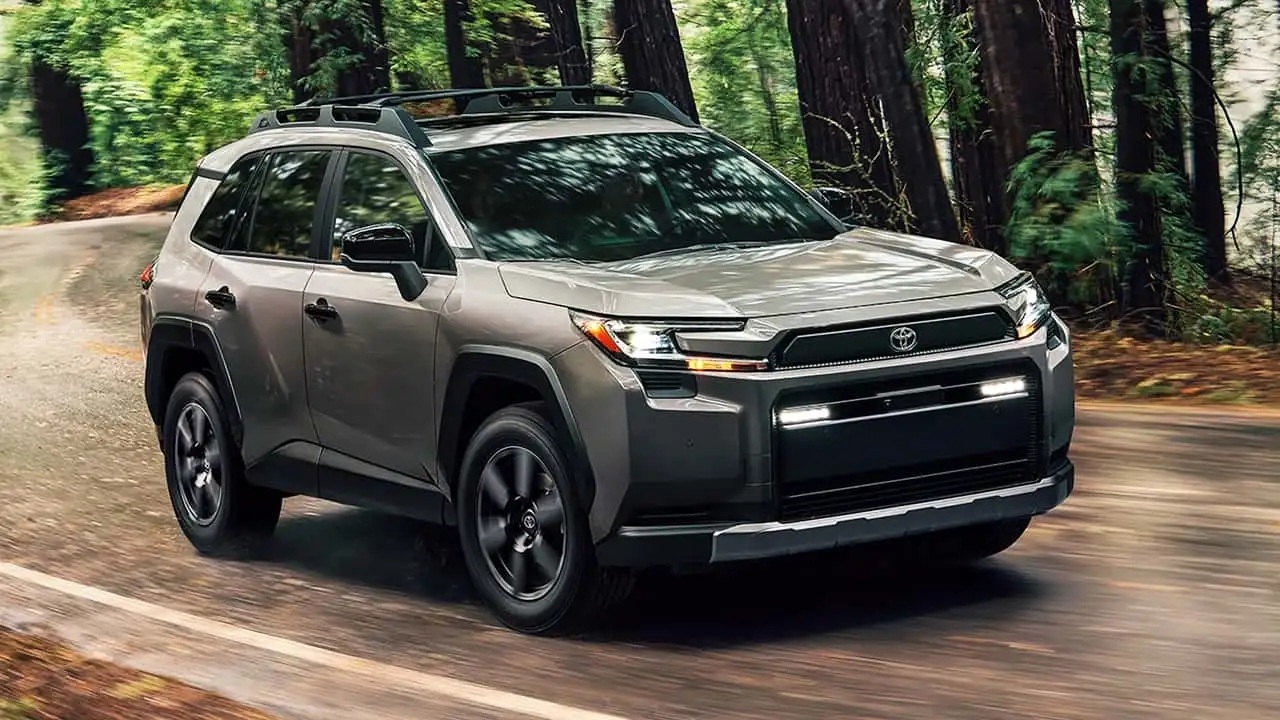
If your winter problem is cost per mile, range between fill-ups and a long-horizon warranty, the 2026 RAV4 is the stronger buy: it returns 41 to 42 MPG combined with all-wheel drive against the CR-V Hybrid AWD's 37, tows 3,500 pounds against 1,000, and carries a 10-year, 150,000-mile hybrid battery warranty in Illinois against Honda's 8-year, 100,000-mile term. If your winter problem is a steep garage ramp and you do not want another monthly subscription, the CR-V documents Hill Descent Control on every trim and key-fob remote start that costs nothing after you buy it. Toyota's 2026 brochure lists Snow and Trail modes for the RAV4 hybrid powertrain, so Snow mode is not a Honda-only advantage.
That is the honest summary. Now the part most dealer comparison pages skip.
The 2026 Honda CR-V received a Poor rating in the IIHS updated moderate overlap front test. The Institute's assessment of rear passenger restraints and dummy kinematics is Poor and rear chest injury measures are Marginal, and that result applies to the 2023 through 2026 model years. The CR-V rates Good in the small overlap front, side and headlight evaluations.
In the same breath: the sixth-generation 2026 Toyota RAV4 does not yet have a published IIHS vehicle rating. That is not a better score. It is the absence of a score. NHTSA's public 2026 testing-selection page does not establish an overall star rating for either vehicle, so this guide does not assign one. If independent crash-test results are decisive for you, read the CR-V's published IIHS results in full and recheck both IIHS and NHTSA before purchasing.
Six advantages that are real, published and relevant to driving here from November through March.
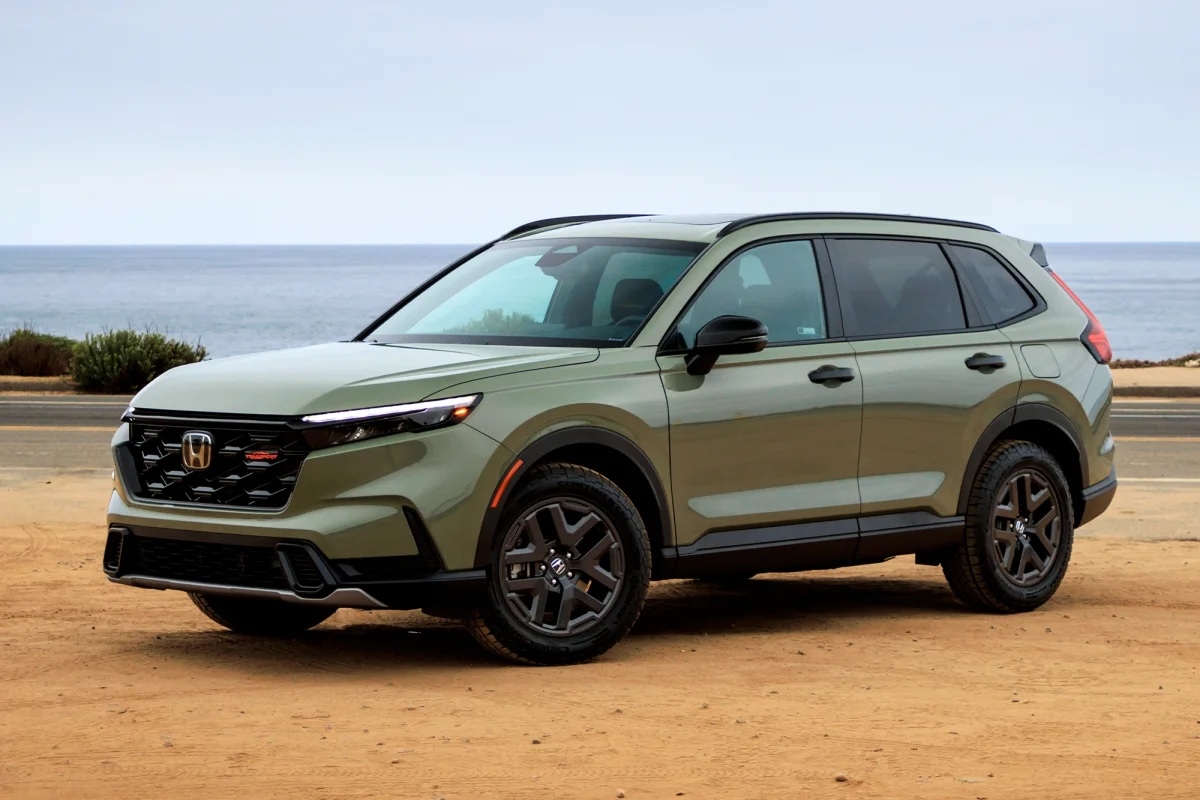
The CR-V beats the RAV4 on documented Hill Descent Control, subscription-free remote start, entry price, maximum cargo volume with the seats down, the price of admission to a heated steering wheel, and the availability of a non-hybrid model. Those are not consolation prizes. Several are things a Chicago driver can use every cold morning.
Honda documents Hill Descent Control across the 2026 CR-V range. Toyota documents no downhill assist on any 2026 RAV4 grade. On an icy garage ramp, that is a difference you can feel.
Honda's is a key-fob function, standard on EX and above and across the hybrids, with nothing to renew. Toyota's runs through Remote Connect on a one-year trial, after which Toyota states enrollment in a paid subscription is required.
A CR-V LX 2WD starts at $32,315 with destination against $33,350 for a RAV4 LE Hybrid FWD. A $1,035 gap at the bottom of each range.
Honda publishes 36.3 cubic feet behind the rear seats and 71.8 folded for the CR-V Hybrid. Toyota publishes 37.8 behind the seats, 36.6 on Limited, and no seats-folded figure at all.
The heated wheel arrives on the CR-V TrailSport Hybrid at $40,195 with destination. The cheapest RAV4 with one is the Woodland at $41,350. In January this is not a luxury item.
Honda still sells gasoline-only CR-V LX, EX and EX-L trims. Toyota no longer offers a gas-only RAV4. If you do not want a hybrid, Toyota has removed that choice and Honda has not.
Toyota states that Remote Connect includes a one-year trial and that after the trial "enrollment in a paid subscription is required," and that Toyota Connected Services plans "start at $15/month." Run that out on a car you intend to keep: seven winters past the trial, paid monthly at the entry rate, is roughly $1,260. Honda's key-fob remote start is $0 for the life of the vehicle.
Whether that matters depends on where you park. If you use a heated garage in River North, you may never touch remote start. If you scrape a windshield on a Bucktown side street five mornings a week from December to March, the difference between free and $15 a month belongs on your comparison sheet.
Six advantages, all of them from published manufacturer or EPA figures.
The RAV4's case is built on running cost, capability and warranty length rather than on winter gadgets. Its all-wheel-drive hybrid returns 4 to 5 MPG more combined than the CR-V Hybrid AWD, it tows three and a half times as much, its hybrid battery is warranted for two more years and 50,000 more miles in Illinois, it offers a plug-in version with 52 miles of electric range, and it sits slightly higher off the ground.
RAV4 LE and SE AWD are EPA-rated 45 / 39 / 42; XLE Premium AWD is 45 / 38 / 41. The CR-V Hybrid AWD is 40 / 34 / 37. Over a year of driving that gap is real money.
Toyota rates the RAV4 Hybrid at 3,500 pounds and Honda rates the CR-V Hybrid at 1,000. If a small boat or a utility trailer is in your life, this ends the comparison on its own.
Toyota's hybrid battery warranty is 10 years or 150,000 miles, transferable. Honda's federal term is 8 years or 100,000. Honda's longer 10-year term applies in CARB states, and Illinois is not one, so the applicable comparison here is 10/150 against 8/100.
RAV4 SE and XSE Plug-in Hybrid are rated at 52 miles of EV range, Woodland 49, GR SPORT 48. Honda offers no plug-in CR-V. For a Loop commute that is most of a workweek without gasoline.
Toyota lists 8.1 inches on LE, XLE Premium, SE and XSE, 8.5 on Woodland, and 7.5 on the GR SPORT. Honda lists 7.8 on front-drive CR-Vs and 8.2 on all-wheel drive. A small edge, and the difference between clearing a plow ridge and scraping it.
RAV4 Hybrid AWD produces 236 horsepower, front-drive 226, Plug-in Hybrid 324. The CR-V Hybrid produces 204 horsepower and 247 lb-ft. You notice it merging onto the Kennedy from a short ramp in slush.
What the two manufacturers actually say, quoted rather than paraphrased.
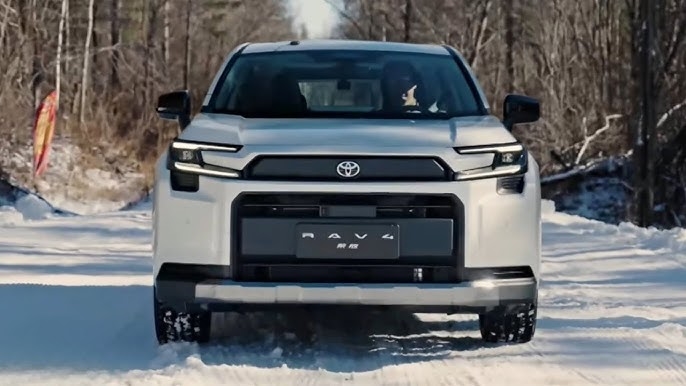
Both vehicles use an on-demand all-wheel-drive system rather than a locked full-time setup, but they get torque to the rear axle in fundamentally different ways: the RAV4 uses a dedicated rear electric motor with no driveshaft, and the CR-V mechanically sends engine torque rearward. Toyota's system is described as acting before slip as well as after it. Toyota does not publish a front-to-rear torque split, so nobody should quote you one.
The official name on 2026 RAV4 materials is Electronic On-Demand All-Wheel Drive. There is no propeller shaft to the back axle. Instead a dedicated rear electric motor, which Toyota labels MGR, drives the rear wheels on its own. Toyota does not use the older "AWD-i" name in its 2026 United States materials, so if you see it in a listing, it is being carried over from an earlier generation.
Toyota describes two behaviors that matter on a Chicago morning. The first is anticipatory: the system works by "preemptively distributing driving force to the rear wheels to help suppress front wheel slip during off-the-line starts." That is the pull away from a glazed intersection, the moment a front-drive crossover scrabbles. The second is reactive: it "engages the rear motor in response to slippage at the front wheels and enhances cornering agility by helping to reduce understeer," through "precise electronic control of the front-rear torque distribution."
Honda's is a mechanical all-wheel drive that sends engine torque rearward when the fronts start to lose grip. Honda has published a figure of up to 50 percent of engine torque to the rear wheels, but that number comes from a 2023 CR-V press kit rather than the 2026 release, so treat it as generation-level information. For 2026 Honda also documents enhanced traction management below 9 mph on all-wheel-drive CR-Vs, aimed at getting a stuck vehicle moving.
All-wheel drive helps you accelerate. It does very little for stopping and cornering on ice, which is where most winter incidents in the city actually happen. A set of dedicated winter tires on either of these vehicles will do more for your safety margin than choosing one all-wheel-drive system over the other. Any salesperson who tells you otherwise is selling you the wrong thing.
For the broader look at how Toyota's all-wheel-drive lineup handles conditions here, see our Toyota AWD winter guide for Chicago and the current all-wheel-drive vehicles on the lot.
The hardware you interact with when it is 18 degrees and the car has been parked outside all night.
Both vehicles publish winter-specific controls, but the control sets are not identical. Honda lists Snow mode and Hill Descent Control on every 2026 CR-V. Toyota's 2026 brochure lists Snow and Trail modes with Normal, Eco, Sport and EV for the RAV4 hybrid powertrain, while Toyota's launch material also names Custom mode. Exact Toyota controls vary by grade and powertrain, so confirm the window sticker and the vehicle itself. On cold-weather comfort features the two are close, and on driver assistance they are close enough that we will not claim a winner.
| Feature | 2026 Toyota RAV4 | 2026 Honda CR-V |
|---|---|---|
| Snow drive mode | Published for the hybrid powertrain; confirm grade and control layout | Every trim |
| Hill Descent Control | Not listed in the current published feature materials reviewed | Every trim |
| Drive modes | Normal, Eco, Sport and EV; Toyota sources also list Custom, Trail and Snow by grade or powertrain | Normal, Econ, Snow (Sport added on Sport Hybrid) |
| Remote start | Remote Connect, 1-year trial, paid subscription after | Key fob, no subscription, EX and up |
| Heated front seats | XLE Premium, SE, GR SPORT and above | EX and up |
| Heated steering wheel | Limited, Woodland, GR SPORT | TrailSport Hybrid, Sport Touring Hybrid |
| Windshield deicer | Limited and Woodland | Not listed |
| 120V / 1500W cargo outlet | Plug-in Hybrid only | Not offered |
| Ground clearance | 8.1 in, 8.5 Woodland, 7.5 GR SPORT | 7.8 in FWD, 8.2 in AWD |
Swipe the table sideways to see all three columns.
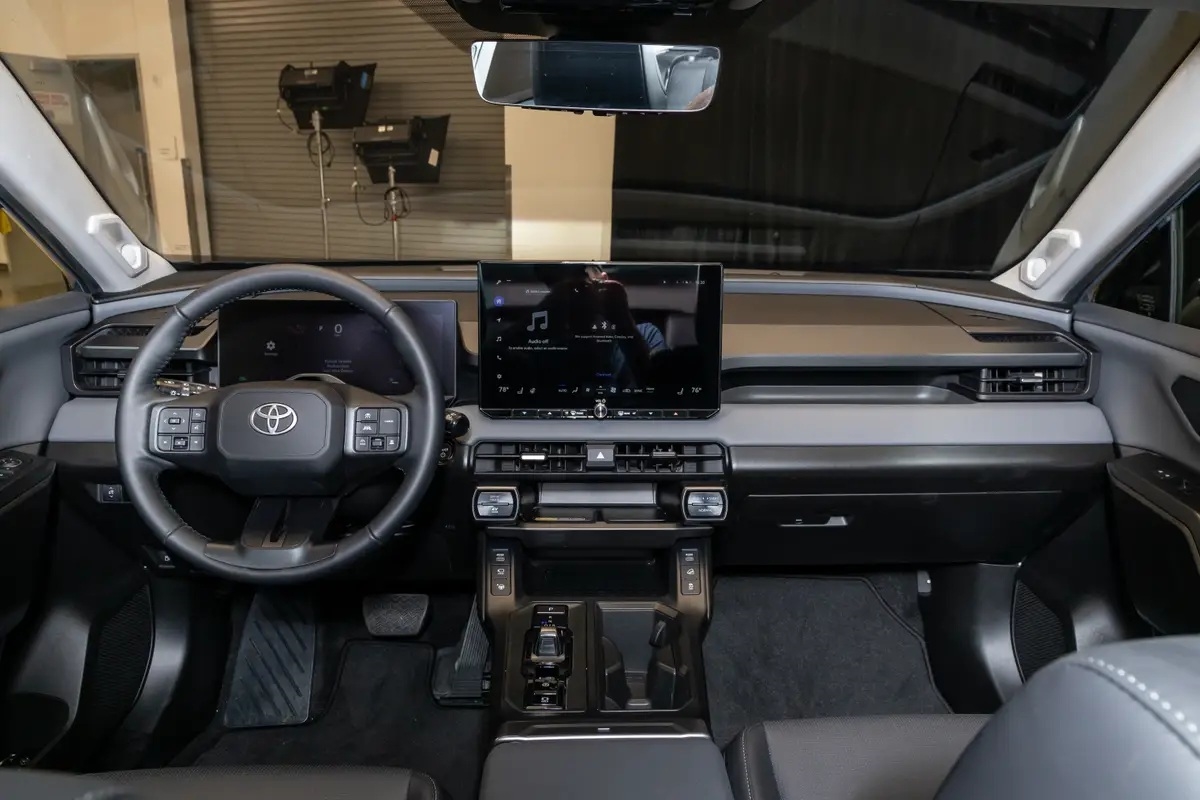
Every 2026 RAV4 carries Toyota Safety Sense 4.0: Pre-Collision System with pedestrian detection, Full-Speed Range Dynamic Radar Cruise Control, Lane Departure Alert with Steering Assist, Automatic High Beams, Lane Tracing Assist, Road Sign Assist and Proactive Driving Assist, plus Blind Spot Monitor with Rear Cross-Traffic Alert and Front Cross-Traffic Alert.
Every 2026 CR-V carries Honda Sensing: Collision Mitigation Braking System, Road Departure Mitigation, Lane Departure Warning, Forward Collision Warning, Adaptive Cruise Control with Low-Speed Follow, Lane Keeping Assist, Traffic Sign Recognition, Traffic Jam Assist and Auto High Beam, with Blind Spot Information from EX.
Side by side, the parity is obvious. Blind spot monitoring reaching every RAV4 grade while the CR-V gates it above LX is a genuine but narrow Toyota point. Everything else is a naming difference, not a capability difference.
The number on the window sticker is not the number you will see in January, and that applies to both of these vehicles.
The US Department of Energy reports that fuel economy at 20 degrees Fahrenheit in city driving is about 15 percent lower than at 77 degrees for conventional vehicles, and that hybrids "can experience a decrease in fuel economy of around 30 percent." Neither of these vehicles is exempt. Your 42-MPG RAV4 will behave more like a high-20s car during a Chicago cold snap, and your 37-MPG CR-V will behave more like a mid-20s car. This is normal, it is not a defect, and no dealer should let you find out about it in February.
| Vehicle | EPA combined | Approx. at a 30% reduction |
|---|---|---|
| RAV4 LE / SE Hybrid AWD | 42 MPG | about 29 MPG |
| RAV4 XLE Premium Hybrid AWD | 41 MPG | about 29 MPG |
| CR-V Hybrid AWD | 37 MPG | about 26 MPG |
| CR-V TrailSport Hybrid AWD | 35 MPG | about 25 MPG |
Swipe the table sideways to see all three columns.
Two things stack in a Chicago winter. Cold oil and cold air make an engine work harder for the first several minutes, and cabin heat on a hybrid often requires the gasoline engine to run when it would otherwise be off. A hybrid's biggest advantage is shutting the engine down in stop-and-go traffic. In February, when you need heat, it cannot shut down as often. That is why the Department of Energy's hybrid figure is roughly double the conventional-vehicle figure.
The takeaway is not "do not buy a hybrid." It is that the RAV4's roughly 5-MPG combined advantage does not disappear in the cold; it shrinks in absolute terms along with everything else, and both cars still beat any gasoline compact SUV.
The National Weather Service 1991 to 2020 normals for Chicago put average annual snowfall at 38.4 inches, with 7.6 inches in December, 11.3 in January and 10.7 in February. The January average high is 31.6 degrees and the average low is 18.8. Normal first and last measurable snow fall on 11/18 and 04/02, and the normal first and last one-inch-or-greater snowfalls land on 12/07 and 03/20. That is roughly four and a half months in which the vehicle you choose is doing winter work.
The City of Chicago Department of Streets and Sanitation covers more than 9,400 lane miles and more than 280 snow routes, and arterials are treated first. The side street you park on is not on that list, which is the practical case for ground clearance and for a system that puts torque down before the fronts spin.


We are an authorized Toyota dealership on Fremont St, a few blocks from the Kennedy. A spec sheet cannot tell you whether you like a car's seating position, how the heated wheel feels through a glove, or whether the driver assistance chimes annoy you. A test drive can.
Browse new Toyota inventory and check which grades are actually on the ground before you drive over.
Compare the full all-wheel-drive lineup, not just the RAV4, if winter traction is your first priority.
Get directions to Fremont St from the Loop, Lincoln Park, Wicker Park or anywhere off I-90/94.
Monday through Friday 9 AM to 8 PM, Saturday 9 AM to 6 PM. Closed Sunday.
Call sales at (877) 413-8672 or send a question through our contact page.
If you are torn between the two RAV4 powertrains, read our RAV4 Hybrid vs. Plug-in Hybrid guide.
Pricing shown includes the $1,450 destination charge. Do not compare these to Toyota's "from $31,900" figure, which excludes it.
The sixth-generation 2026 RAV4 is sold in the United States as a hybrid only, in seven grades: LE, XLE Premium, Limited, Woodland, SE, XSE and GR SPORT. There is no plain XLE in the US lineup and there is no gasoline-only model. Four grades are available as a Plug-in Hybrid.
| Grade | Powertrain | Drive | TSRP with destination | EPA c / h / comb |
|---|---|---|---|---|
| LE | Hybrid | FWD | $33,350 | 47 / 40 / 43 |
| LE | Hybrid | AWD | $34,750 | 45 / 39 / 42 |
| SE | Hybrid | FWD | $36,150 | 47 / 40 / 43 |
| SE | Hybrid | AWD | $37,550 | 45 / 39 / 42 |
| XLE Premium | Hybrid | FWD | $37,550 | 47 / 40 / 43 |
| XLE Premium | Hybrid | AWD | $38,950 | 45 / 38 / 41 |
| Woodland | Hybrid | AWD | $41,350 | 41 / 35 / 38 |
| XSE | Hybrid | AWD | $44,200 | 41 combined |
| Limited | Hybrid | AWD | $44,750 | 41 combined |
| SE | Plug-in Hybrid | AWD | $42,950 | 43 / 36 / 40 |
| Woodland | Plug-in Hybrid | AWD | $46,750 | 42 / 35 / 38 |
| XSE | Plug-in Hybrid | AWD | $48,650 | 43 / 36 / 40 |
| GR SPORT | Plug-in Hybrid | AWD | $49,950 | 41 / 34 / 37 |
Swipe the table sideways to see all five columns.
The charging hardware is not consistent across the plug-in grades, and the split is not the one you would guess. XSE and Woodland Plug-in Hybrids get an 11-kW onboard charger with a CCS1 port and DC fast charging, which Toyota rates at roughly 30 minutes from 10 to 80 percent. The SE, which is the least expensive plug-in at $42,950, and the GR SPORT, which is the most expensive vehicle in the entire lineup at $49,950, both get a 7-kW onboard charger with a J1772 connector and no DC fast charging. On those two, a 10 to 80 percent charge takes roughly four hours.
If you plug in overnight in a garage, the 7-kW car is fine and you will never notice. If you were counting on topping up quickly at a public station, buy the XSE or the Woodland. Toyota does not disclose the plug-in battery's capacity in kilowatt-hours, so anyone quoting you one is guessing.
Toyota publishes 37.8 cubic feet behind the rear seats on the 2026 RAV4, and 36.6 on the Limited. Toyota does not publish a seats-folded maximum. The 69.8 and 70.4 cubic-foot figures circulating online are third-party estimates that disagree with each other. Honda does publish a maximum for the CR-V Hybrid, at 71.8 cubic feet.
So the honest comparison is this: behind the rear seats the RAV4 is slightly larger, 37.8 against 36.3; with the seats folded, the CR-V has a published number and the RAV4 does not. If maximum cargo decides your purchase, bring the item you plan to carry and put it in the back of both cars.
Sorted by what your winter looks like rather than by which badge we sell.
Buy the RAV4 if you drive a lot of miles, tow anything, want a plug-in option, or intend to keep the car past 100,000 miles. Buy the CR-V if you want Hill Descent Control on every trim, refuse to pay a subscription for remote start, want the lowest entry price, want a non-hybrid, or want a vehicle with published IIHS crash-test results today.
| If this describes you | Lean toward | Because |
|---|---|---|
| 15,000+ miles a year, mixed city and expressway | RAV4 Hybrid AWD | 41 to 42 MPG combined against 37 |
| You tow a small trailer or boat | RAV4 Hybrid | 3,500 lb against 1,000 lb |
| Garage charging and a short commute | RAV4 Plug-in Hybrid | 52 miles of EV range on SE and XSE |
| Keeping the vehicle 10 years | RAV4 | 10 yr / 150,000 mi hybrid battery in Illinois |
| Steep or slick garage ramp | CR-V | Hill Descent Control on every trim |
| You will not pay a monthly fee to start your car | CR-V | Key-fob remote start, no subscription |
| Lowest possible payment | CR-V LX | $32,315 against $33,350 with destination |
| You want published crash-test results today | CR-V | The RAV4 is unrated by IIHS and NHTSA; read the CR-V's results in full first |
Swipe the table sideways to see all three columns.
If the answer is still not obvious, that is because these two are genuinely close and the deciding factor is usually personal: the seat, the visibility, the payment. Come drive one. If you leave preferring the CR-V, we would rather you buy the right car than the one we happen to stock.
Seven grades, all hybrid, all-wheel drive available across the range, and a plug-in option with 52 miles of electric range on SE and XSE.
EPA-estimated combined on LE, SE and XLE Premium all-wheel drive. Expect less in deep cold, as this page explains.
A dedicated rear electric motor that Toyota says preemptively sends drive force rearward to suppress front wheel slip off the line.
Toyota's hybrid battery warranty term, transferable to the next owner. Hybrid-related components are covered 8 years or 100,000 miles.
We published where the CR-V wins because you will find it out anyway. We would rather you hear it from us first.
All specifications, EPA estimates, warranty terms and pricing reflect manufacturer information published as of 08/17/2026 and are subject to change without notice. Toyota prices are TSRP and Honda prices are MSRP; both include destination and exclude taxes, title, license, dealer fees and options. EPA estimates are for comparison purposes only. Honda and CR-V are trademarks of their respective owner and are referenced here for comparison only. This page is editorial content and is not an offer of sale.
View New Toyota InventoryToyota of Downtown Chicago is an authorized Toyota dealership at 1561 N Fremont St, Chicago, IL 60642, serving drivers across the Loop, West Loop, River North, South Loop, Gold Coast, Lincoln Park, Old Town, Wicker Park, Bucktown, Lakeview and Cook County. Sales hours are Monday through Friday 9 AM to 8 PM and Saturday 9 AM to 6 PM.
We are three blocks from the Kennedy Expressway at North Avenue, which makes a test drive easy to combine with a normal errand. Get directions to Fremont St or browse new Toyota inventory before you come over.
Normal first measurable snowfall in Chicago is 11/18. That is not far off. Come see one on Fremont St.
