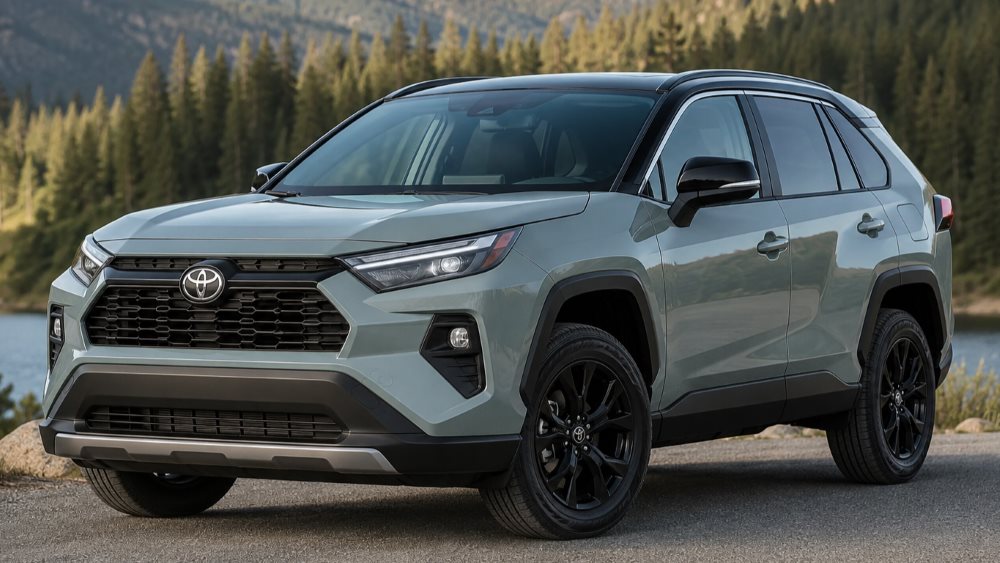
About this guide: Toyota of Downtown Chicago is a factory-authorized Toyota dealer in Lincoln Park (formerly Toyota of Lincoln Park), serving drivers across Chicago and Cook County. Our team helps Chicago buyers choose between RAV4 powertrains every week, and our Toyota-trained technicians service all of them — standard hybrid, plug-in hybrid, and the high-voltage systems each one uses. New RAV4 purchases include ToyotaCare, covering factory-scheduled maintenance for 2 years or 25,000 miles, whichever comes first. Last reviewed June 2026.
For 2026, the Toyota RAV4 is offered only as a hybrid, so the decision most Chicago shoppers face is no longer gas versus hybrid — it's the standard hybrid (HEV) versus the plug-in hybrid (PHEV). The short version: the standard hybrid will likely be the better fit for many buyers. It starts around $33,350, returns roughly 44 mpg, needs no plug, and offers all-wheel drive. Step up to the plug-in only if you can charge where you park — then you get up to 52 miles of electric-only driving and 320 horsepower, for roughly $9,000–$10,000 more. In our experience here in Chicago, whether you can plug in at home matters more than any number on the spec sheet. Questions on a specific trim? Our sales team is at (877) 413-8672.
This guide breaks down the all-hybrid 2026 redesign, the real differences between the HEV and PHEV, what charging actually requires, and the Chicago-specific factors — winter range, all-wheel drive, parking and charging access, and cost — that should drive your choice. We close with a by-trim pricing breakdown and an honest "who should buy which" for downtown, Lincoln Park, and Chicagoland drivers.
The 2026 RAV4 Is Hybrid-Only — and That Reframes the Question
The 2026 RAV4 is an all-new sixth generation, and the headline change is simple: Toyota dropped the conventional gas-only engine entirely. Every 2026 RAV4 now pairs a 2.5-liter four-cylinder with electric motors. That leaves two paths — the standard hybrid that charges itself as you drive, and the plug-in hybrid that you can charge from the wall for dozens of all-electric miles before the gas engine is needed.
The redesign also brings a more upright, boxy exterior, a 12.3-inch digital gauge cluster on every trim, a 10.5- or 12.9-inch touchscreen depending on grade, Toyota's new Arene software platform, and Toyota Safety Sense 4.0 — the first Toyota to launch with it, now making blind spot warning and rear cross-traffic warning standard across the board according to Toyota's announced U.S. specifications. The lineup expands to seven grades across three design themes: Core (LE, XLE Premium, Limited), Sport (SE, XSE, GR Sport), and the rugged Woodland.
HEV vs. PHEV at a Glance
Here's the core comparison. Read the rest of the article for the nuance behind each row — especially charging and Chicago winter, where the spec sheet doesn't tell the whole story.
| Feature | RAV4 Hybrid (HEV) | RAV4 Plug-In Hybrid (PHEV) |
|---|---|---|
| Do you plug it in? | No — charges itself via the engine and regenerative braking | Yes — plug in to get the full electric range |
| Horsepower | 226 hp (FWD) / 236 hp (AWD) | 320 hp (AWD standard) |
| Electric-only range | Short bursts only (not a plug-in EV range) | Up to 52 miles (EPA-estimated; 48–52 by trim) |
| Fuel economy | Up to ~44 mpg combined (48 city / 42 hwy, FWD) | Near-zero gas on charged short trips; strong hybrid mpg after |
| Drivetrain | FWD standard; AWD optional on most trims | All-wheel drive standard |
| DC fast charging | N/A | XSE and Woodland only; SE and GR Sport are AC-charging only |
| Max towing | Up to 3,500 lbs (AWD trims; 1,750 lbs on some FWD) | Up to 3,500 lbs (properly equipped) |
| Starting MSRP (approx.) | From about $33,350 | From about $42,950, up to about $49,950 |
| Best for | Most buyers; anyone without reliable home charging | Home-charging commuters who want electric daily driving and more power |
What Is the Standard RAV4 Hybrid (HEV)?
The standard hybrid is what most people picture when they think "RAV4 hybrid." A 2.5-liter engine works with electric motors and a small battery that recharges itself — there's no plug and nothing to remember. You fuel it like any gas car and let the system do the rest.
For 2026 it makes 226 horsepower in front-wheel-drive form and 236 horsepower with all-wheel drive, both up meaningfully from the previous generation. Front-wheel drive returns as the entry point, which keeps the starting price down; all-wheel drive is optional on most trims for a modest premium. Fuel economy is the standout — front-drive hybrids are EPA-rated at up to 48 mpg city, 42 highway, and around 44 combined, with all-wheel-drive trims a couple of mpg behind. The hybrid is offered across the LE, XLE Premium, Limited, SE, XSE, and Woodland grades.
Note: "Self-charging hybrid" does not mean you ever plug it in or that it drives long distances on electricity alone. The standard hybrid's battery is small by design — it exists to smooth out stop-and-go driving and boost efficiency, not to give you an all-electric commute. If electric-only daily driving is your goal, that's the plug-in's job.
What Is the RAV4 Plug-In Hybrid (PHEV)?
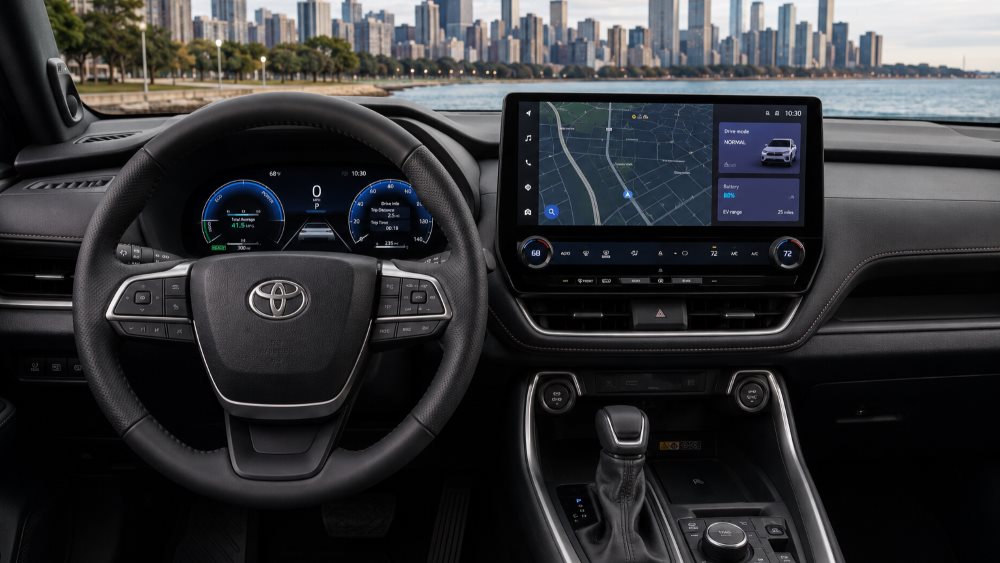
The plug-in hybrid is the same idea taken further. A larger 22.7-kWh battery and a more powerful electric system let the 2026 RAV4 PHEV travel up to 52 miles on electricity alone (EPA-estimated, depending on trim) before the gas engine is needed at all. Plug in overnight and many Chicago drivers can cover a full day of commuting and errands without burning a drop of gas — then the hybrid system takes over for longer trips, so there's no range anxiety and no hunting for a charger on a road trip.
Toyota dropped the "Prime" name for 2026 — what was the RAV4 Prime is now simply the RAV4 PHEV. It's the performance flagship of the lineup at a combined 320 horsepower with all-wheel drive standard, making it the quickest RAV4 you can buy. The plug-in comes in four grades: SE, XSE, Woodland, and the new GR Sport, which is plug-in-only and sits at the top of the range.
Charging the PHEV: what it actually takes
This is the part shoppers most often underestimate, so it's worth being concrete. There are three ways to add charge, and they're very different in speed:
- Level 1 (standard 120-volt household outlet): Slow. Usable as a trickle top-up overnight, but it can take well over a day to fully replenish a depleted battery — not a practical daily solution for most people.
- Level 2 (240-volt, like a dryer outlet or a home wall charger): The realistic home setup. A full charge takes approximately four hours under ideal Level 2 charging conditions, so plugging in overnight gives you a full electric battery every morning.
- DC fast charging (public Level 3): Newly available on the RAV4 PHEV — a genuine rarity for plug-in hybrids — but only on the XSE and Woodland grades, which can go from 10% to 80% in approximately 30 minutes under ideal DC fast-charging conditions. The SE and GR Sport use a different charging port and cannot fast charge at all. If quick public top-ups matter to you, that's a trim-selection decision to make before you buy.
The technical upgrade behind the longer range, for those who like the detail: Toyota fitted a more efficient front electric drive axle that uses silicon carbide semiconductors for the first time on this model, alongside the bigger battery. The practical takeaway is simpler — the plug-in's value lives or dies on whether you actually plug it in.
The Real Decision for Chicago Drivers: Can You Charge Where You Park?
We'll be direct about something a lot of dealer comparisons skip. A plug-in hybrid only earns its higher price if you can charge it regularly and conveniently — and in our part of the city, that's not a given. It's the first question we ask anyone weighing the PHEV.
If you have a garage or driveway with 240-volt access
This is the scenario the plug-in is built for. A homeowner in Lincoln Park, Bucktown, Logan Square, or the suburbs with a garage outlet can install Level 2 charging, plug in overnight, and drive electric nearly every day. If your commute and errands fit inside the electric range, you may go weeks between gas-station visits. For this driver, the PHEV's math makes sense and the extra power and efficiency are real benefits.
If you park on the street or in a condo or apartment without charging
This describes a large share of downtown, River North, Streeterville, Old Town, Gold Coast, and dense Lakeview and Lincoln Park residents — and for them, the standard hybrid is almost always the smarter buy. Without a reliable place to plug in, you'd be paying roughly $9,000–$10,000 more for a plug-in you can't keep charged, which means hauling a heavier battery around and running mostly on gas — the opposite of why you bought it. Relying on public DC fast charging for daily PHEV top-ups rarely pencils out: the speeds and electric range are modest compared with a full EV. Depending on local charging rates, public fast charging may reduce or eliminate some of the expected fuel-cost savings. If you can't charge at home, buy the hybrid and enjoy 44 mpg with nothing to plug in.
Why we lead with this: Most "hybrid vs. plug-in" articles compare horsepower and range and stop there. In a dense city, charging access is the variable that actually changes the answer — and it's the one a spec sheet can't show you. Sort out where you'll plug in first; the trim decision gets easy after that.
Chicago Winter: What Cold Weather Does to Each RAV4
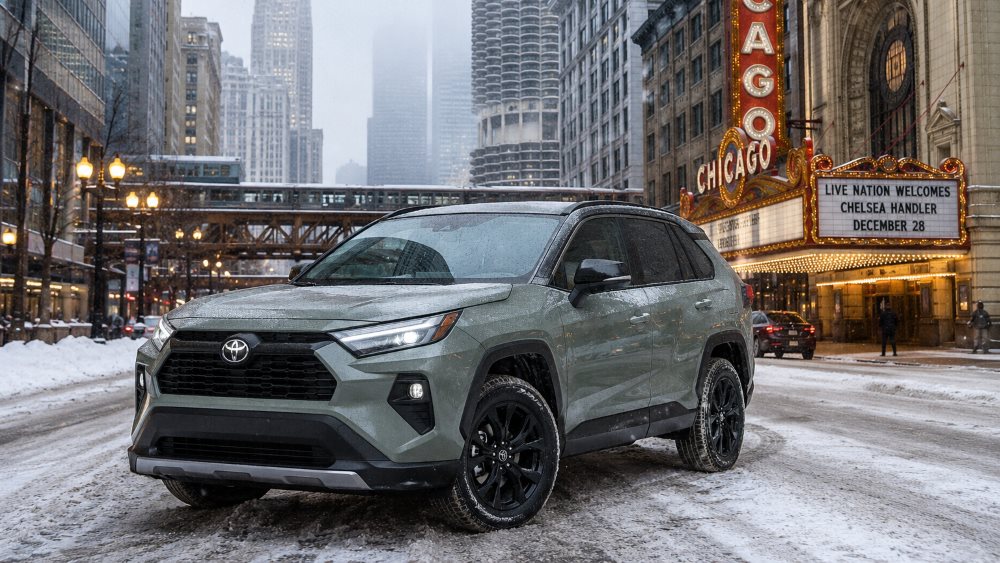
Chicago winters are hard on every vehicle, and they affect the two RAV4s a little differently. None of this should scare you off either one - but it's worth knowing going in.
Cold reduces the plug-in's electric range
Every plug-in hybrid and EV loses electric range in deep cold. Battery chemistry is less efficient at low temperatures, and on a frigid Chicago morning the car also spends energy heating the cabin and conditioning the battery. The result is that an EPA-estimated 50-plus-mile electric range can drop noticeably in January - sometimes substantially on the coldest days. The good news, and a real advantage of a plug-in over a pure EV, is that the gas engine is always there as backup, so you're never stranded by a cold-weather range dip; you'll simply use more gasoline in winter than the EPA figure suggests. Pre-conditioning the cabin while still plugged in helps preserve range and is worth getting in the habit of.
Both handle snow well - and AWD plus winter tires matters more than the powertrain
The plug-in comes with all-wheel drive standard, and the standard hybrid offers all-wheel drive on most trims, so either one can be configured to handle a Chicago winter confidently. What experienced drivers in this climate know is that a good set of dedicated winter tires does more for cold-weather traction and braking than the choice between HEV and PHEV ever will. If you're commuting on Lake Shore Drive or the Kennedy through a February storm, prioritize all-wheel drive and winter rubber.
Salt, short trips, and battery care
Illinois salts aggressively with rock salt and calcium chloride, and that's tough on any vehicle's undercarriage, brake lines, and sensor connectors over time - something commonly observed across the salt belt on vehicles of every type. Short downtown trips, where the engine never fully warms up, can also let moisture and unburned fuel collect in the oil. Hybrids help here because the gas engine runs less of the time, but cold short-trip driving still benefits from on-schedule oil service and periodic inspection. Both RAV4s also use a conventional 12-volt battery that, like any battery, works harder in sub-zero cold; the plug-in's high-voltage battery is managed by the vehicle and benefits from being kept plugged in during extreme cold.
Cost: Purchase, Fuel, and Maintenance
The purchase-price gap
Comparably equipped, the plug-in runs roughly $9,000–$10,000 more than the standard hybrid. That premium buys the electric range, the extra power, and standard all-wheel drive. Whether it pays back depends almost entirely on how much of your driving you can do on electricity - which loops back to home charging.
Fuel and energy
The standard hybrid's roughly 44 mpg is excellent and requires no behavior change. The plug-in can be cheaper to run day to day if you charge at home and your trips fit inside the electric range, since home electricity typically costs less per mile than gasoline. Drive farther than the battery allows, or skip charging, and the plug-in simply operates as a (heavier) hybrid - still efficient, but without the savings that justified the higher sticker.
Federal tax credit - important update for 2026
Federal tax laws and incentives can change. Buyers should consult a qualified tax professional regarding eligibility for any federal, state, local, or utility incentives. State, local, or utility incentives may still exist and change over time, and any federal deductions have their own narrow rules - so confirm what currently applies to your situation with a tax professional, and ask our team about any incentives active when you buy. The takeaway for budgeting: don't assume a $7,500 credit is baked into the plug-in's price the way it might have been a year ago.
Maintenance and coverage
Both share the same 2.5-liter hybrid foundation, so routine maintenance - oil and filter changes, tire rotations, inspections - is similar between them. The plug-in adds a larger high-voltage battery and charging hardware to look after, which our Toyota-trained technicians are equipped to service. Both come with ToyotaCare, covering factory-scheduled maintenance for 2 years or 25,000 miles, whichever comes first, so the first two years of routine upkeep are handled regardless of which you choose.
2026 RAV4 Pricing by Trim
Approximate starting prices are below to frame the decision. Trim availability, options, and pricing change, and figures may or may not include the $1,450 destination charge depending on configuration — so treat these as a starting point and confirm current numbers with our team.
| Trim | Powertrain | Drivetrain | Starting MSRP (approx.) |
|---|---|---|---|
| LE | Hybrid | FWD (AWD avail.) | ~$33,350 |
| SE | Hybrid | FWD (AWD avail.) | ~$36,100 |
| XLE Premium | Hybrid | FWD (AWD avail.) | ~$37,500 |
| Woodland | Hybrid | AWD | ~$39,900 |
| XSE | Hybrid | AWD | ~$41,300 |
| Limited | Hybrid | AWD | ~$43,300 |
| SE | Plug-In Hybrid | AWD | ~$42,950 (AC charging only) |
| Woodland | Plug-In Hybrid | AWD | High $40,000s (DC fast charging) |
| XSE | Plug-In Hybrid | AWD | ~$48,700 (DC fast charging) |
| GR Sport | Plug-In Hybrid | AWD | ~$49,950 (top of lineup; AC charging only) |
Which RAV4 Should You Buy?
Matching the trim to how you actually drive in Chicago:
- You can't charge at home, or you want the lowest price: Standard hybrid, front-wheel drive (LE or SE). Around 44 mpg, nothing to plug in, lowest entry cost.
- You want winter confidence and strong value: Standard hybrid with all-wheel drive. Add winter tires and you're well set for Chicago.
- You have home charging and a commute that fits ~40–50 electric miles: Plug-in hybrid. Daily electric driving, gas backup for road trips, and more power — this is where the PHEV shines.
- You want public fast-charging capability on the plug-in: Choose the XSE or Woodland PHEV specifically - the SE and GR Sport can't DC fast charge.
- You want the quickest, sportiest RAV4 and can charge at home: GR Sport PHEV, the lineup's performance flagship.
- You want light off-road looks and capability: Woodland, available as either hybrid or plug-in.
Frequently Asked Questions
What's the difference between the RAV4 hybrid and plug-in hybrid?
The standard hybrid (HEV) charges itself as you drive and never plugs in; it's about efficiency, with around 44 mpg. The plug-in hybrid (PHEV) has a larger battery you charge from the wall, giving up to 52 miles of electric-only driving before the gas engine is needed, plus more power and standard all-wheel drive - for a higher price.
Do I have to plug in the RAV4 hybrid?
No. The standard hybrid never gets plugged in. It recharges its own battery through the engine and regenerative braking. Only the plug-in hybrid is charged from an outlet or charger.
How far can the 2026 RAV4 plug-in hybrid go on electric only?
Up to an EPA-estimated 52 miles on the SE and XSE grades, about 49 on the Woodland, and 48 on the GR Sport. Expect less in deep cold. After the battery is depleted, it runs as an efficient hybrid, so total driving range is not limited to the electric figure.
Can the RAV4 plug-in hybrid use a DC fast charger?
Only the XSE and Woodland plug-in grades can DC fast charge (roughly 10% to 80% in about 30 minutes under ideal conditions). The SE and GR Sport use a different port and are limited to AC (Level 1 or Level 2) charging. If fast charging matters to you, that decision is made at the trim level.
Is the RAV4 plug-in hybrid worth it if I can't charge at home?
Usually not. Most of the plug-in's value comes from charging at home and driving electric daily. Without reliable home charging, you'd pay thousands more for a vehicle you can't keep charged, and it would mostly run on gas. In that case the standard hybrid is the better choice for most Chicago drivers.
Does the 2026 RAV4 plug-in hybrid qualify for a federal tax credit?
Federal incentive programs have changed significantly since 2025. Eligibility depends on current federal regulations and the date of vehicle acquisition. Consult a qualified tax professional before making a purchase decision based on potential tax benefits
Is the RAV4 good in Chicago winter and snow?
Yes. The plug-in comes with all-wheel drive standard, and the standard hybrid offers it on most trims. Either one, equipped with all-wheel drive and a set of dedicated winter tires, handles Chicago winters confidently. Tires make a bigger difference in snow than the choice of powertrain.
How much electric range does the plug-in lose in cold weather?
It varies, but expect a meaningful drop on the coldest days, because batteries are less efficient in the cold and the car uses energy to heat the cabin. The gas engine covers you so you won't be stranded — you'll just use more gasoline in winter. Pre-conditioning while plugged in helps reduce the loss.
Is the RAV4 plug-in hybrid faster than the standard hybrid?
Yes. The plug-in makes a combined 320 horsepower versus 226 (FWD) or 236 (AWD) for the standard hybrid, making it the quickest RAV4 in the lineup, with the GR Sport as the performance-focused version.
How much does the 2026 RAV4 cost?
The standard hybrid starts around $33,350, and the plug-in hybrid runs from about $42,950 up to about $49,950 for the GR Sport. Pricing and availability change - contact our sales team at (877) 413-8672 for current figures and what's on the lot.
See the 2026 RAV4 in Chicago
The best way to settle the hybrid-versus-plug-in question is to drive both and talk through your parking and charging situation with someone who knows the lineup. Our team at Toyota of Downtown Chicago in Lincoln Park can walk you through trims, check current availability, and lay out financing options for whichever RAV4 fits your driving.
Sales: 872-259-8583
Sales Hours: Monday–Friday 9:00 AM – 8:00 PM | Saturday 9:00 AM – 6:00 PM | Sunday Closed
1561 N Fremont St, Chicago, IL 60642 (Lincoln Park)
Pricing, specifications, range, and availability reflect manufacturer information as of June 2026 and are subject to change; figures exclude taxes, title, and dealer fees. Final trim recommendations may vary based on your driving needs, charging access, and the inventory available - confirm current details with our team before purchasing.
About Toyota of Downtown Chicago
Toyota of Downtown Chicago is a factory-authorized Toyota dealer serving Chicago and Cook County, operated by Murgado Automotive Group from 1561 N Fremont St in Lincoln Park (formerly Toyota of Lincoln Park). We sell and service the full 2026 RAV4 lineup - standard hybrid, plug-in hybrid, and the GR Sport - and our Toyota-trained technicians use Genuine Toyota Parts and the OEM diagnostic tooling required for hybrid and plug-in-hybrid systems. Every new RAV4 includes ToyotaCare, covering factory-scheduled maintenance for 2 years or 25,000 miles, whichever comes first.
This guide is intended as educational information for Chicago-area shoppers. Pricing, specifications, and incentives are representative of June 2026 and subject to change; verify current details with our team. Published June 15, 2026 · Last reviewed June 15, 2026.
